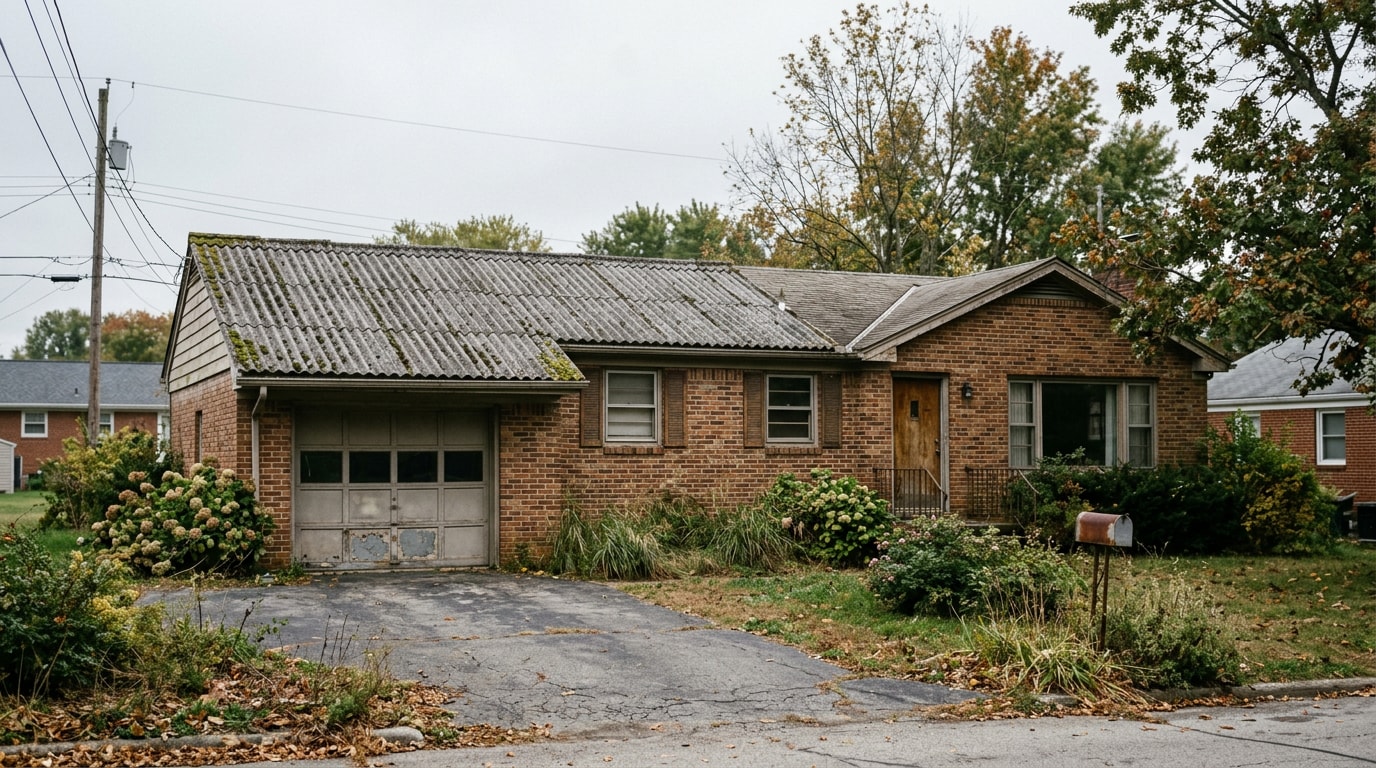
Asbestos concrete turns up often in Matthews, NC properties built before 1980, hiding in old roofing panels, siding, pipes, and even driveway edging. The fibers sit locked inside the hardened material and look like plain gray concrete, so guessing isn't a safe identification method. This guide covers where it shows up locally, how testing and removal actually work, and what happens to your property once the material is gone.
Why Asbestos Shows Up in Concrete Built Before 1980 in Matthews
Manufacturers added asbestos fibers to cement for decades because it solved two problems at once: cracking and fire risk. The fibers let cement sheets and pipes flex slightly instead of splitting under temperature swings, and they slowed the spread of fire on roofing and siding installed over wood framing.
Asbestos was also cheap, plentiful, and easy to blend into wet cement at scale. For builders working through the mid-20th century, it was the practical choice, not an afterthought.
Use peaked from the 1920s through the 1960s and tapered off through the 1970s as health research mounted. Most U.S. manufacturers had phased out asbestos-cement building products by the early 1980s, which is why 1980 is the general cutoff year professionals use when deciding whether a material needs testing. A meaningful share of homes and commercial buildings in Matthews and the broader Mecklenburg County, NC area fall inside that window.
What Is Asbestos Cement?
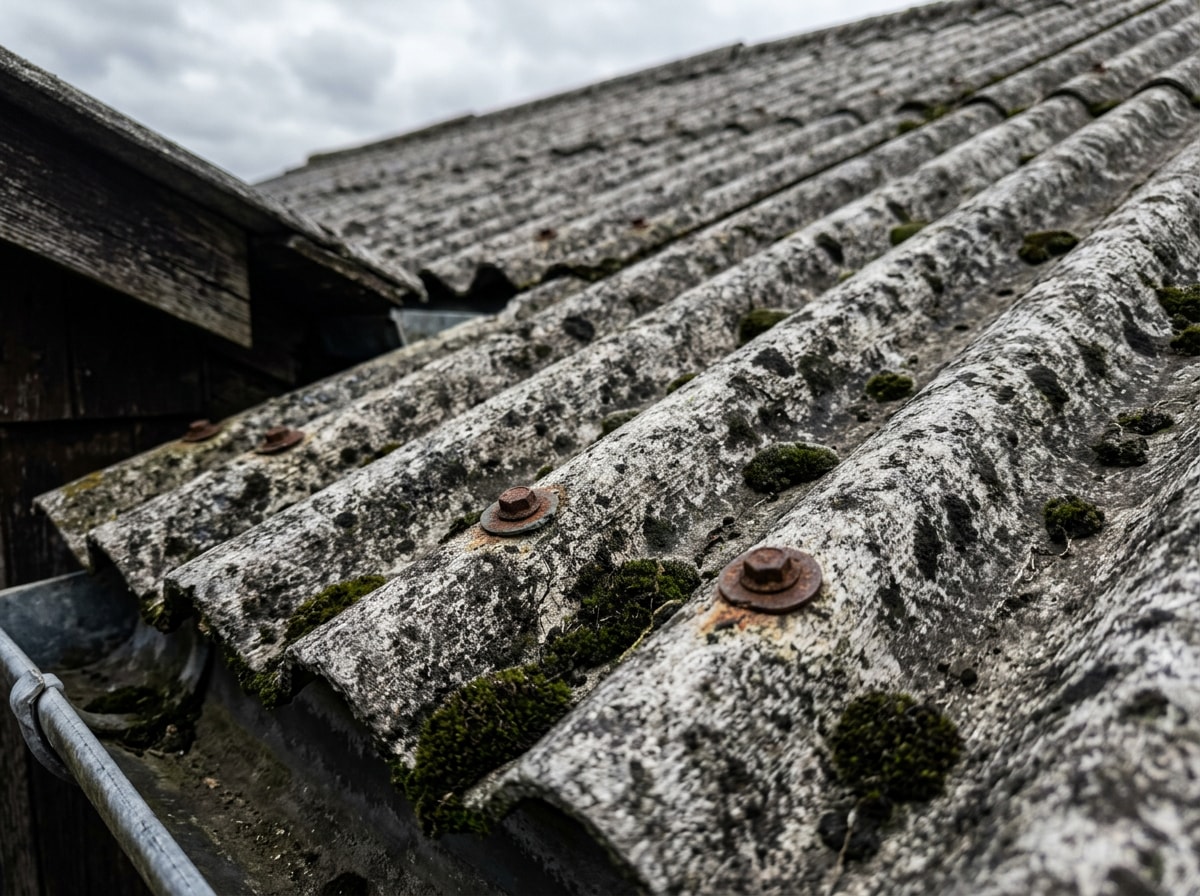
Asbestos cement, also called asbestos concrete, is ordinary cement blended with asbestos fibers, usually chrysotile, a softer, curlier fiber that mixed easily into wet material. Manufacturers pressed or poured the mix into sheets, pipes, shingles, and panels used across residential and commercial construction.
Once cured, those fibers are sealed inside the hardened matrix. There's no visible texture, color, or pattern that reliably flags asbestos content. That's exactly why a visual inspection, no matter how careful, can't confirm or rule it out.
Common Asbestos-Containing Concrete Products in Older Matthews Homes
Several product types account for most of what shows up during renovations on pre-1980 properties. Recognizing these is the first practical step toward deciding whether a closer look is worth it.
| Product Type | Where It's Typically Found | Why It's Easy to Miss |
|---|---|---|
| Corrugated cement roofing | Garages, sheds, older additions | Often covered in moss or algae, mistaken for ordinary aging |
| Cement siding shingles | Exterior walls of homes built 1940s-1970s | Looks identical to later fiber-cement siding |
| Transite pipe | Water supply lines, drain lines, flues | Buried or hidden in crawlspaces and chases |
| Gutters and downspouts | Attached to original cement roofing systems | Rarely tested alongside the roof itself |
| Patching compounds and floor mastic | Basements, utility rooms, slab edges | Looks like standard joint compound or adhesive |
If any of these exist on a pre-1980 property in Matthews, professional sampling is the only reliable way to confirm what you're working with before cutting, drilling, or demolishing anything nearby.
How to Test Concrete for Asbestos
Concrete creates a tricky identification problem because fibers are mixed evenly through the material rather than sitting in a surface layer, the way they might in old vinyl tile or wallboard. A cracked or broken chunk of asbestos concrete won't necessarily show visible fibers, so surface inspection alone can't rule anything out.
Confirming asbestos content requires a physical sample analyzed at a certified lab, almost always using polarized light microscopy (PLM) to identify fiber type under magnification. This is the method referenced in federal testing protocols, and the EPA's asbestos technical resources for bulk material analysis outline the accepted laboratory procedures in detail.
Mail-in DIY kits exist, but they still route the sample to the same type of accredited lab. The real difference is who collects the sample and how safely. In our own site-prep work across Mecklenburg County, we've seen homeowners crack a suspect slab edge trying to get a DIY sample, which is exactly the kind of disturbance that should be avoided until a result comes back.
Testing costs vary by market and lab, but for a single-material sample with professional collection and lab analysis, budgeting somewhere in the low hundreds of dollars per visit is realistic. Multi-sample surveys cost more but usually make more sense when several suspect materials exist on one property.
What Are the Dangers of Asbestos-Containing Concrete?
Intact, undisturbed asbestos concrete is considered low-risk because the fibers stay bound inside the hardened material. The danger shows up when it's cut, drilled, sanded, or demolished, activities that release microscopic airborne fibers into the surrounding air where they can be inhaled.
Inhaled asbestos fibers are linked to serious diseases, including mesothelioma, asbestosis, and lung cancer. According to the CDC's Agency for Toxic Substances and Disease Registry, signs of mesothelioma may not appear until 30 to 40 years after exposure, which is part of what makes this material so easy to underestimate. Risk climbs in enclosed, poorly ventilated spaces where disturbed fibers have nowhere to disperse.
This is the core reason professionals treat any cutting or demolition of suspected asbestos concrete as a controlled job requiring protective gear, not routine renovation work.
Safe Removal of Asbestos Concrete
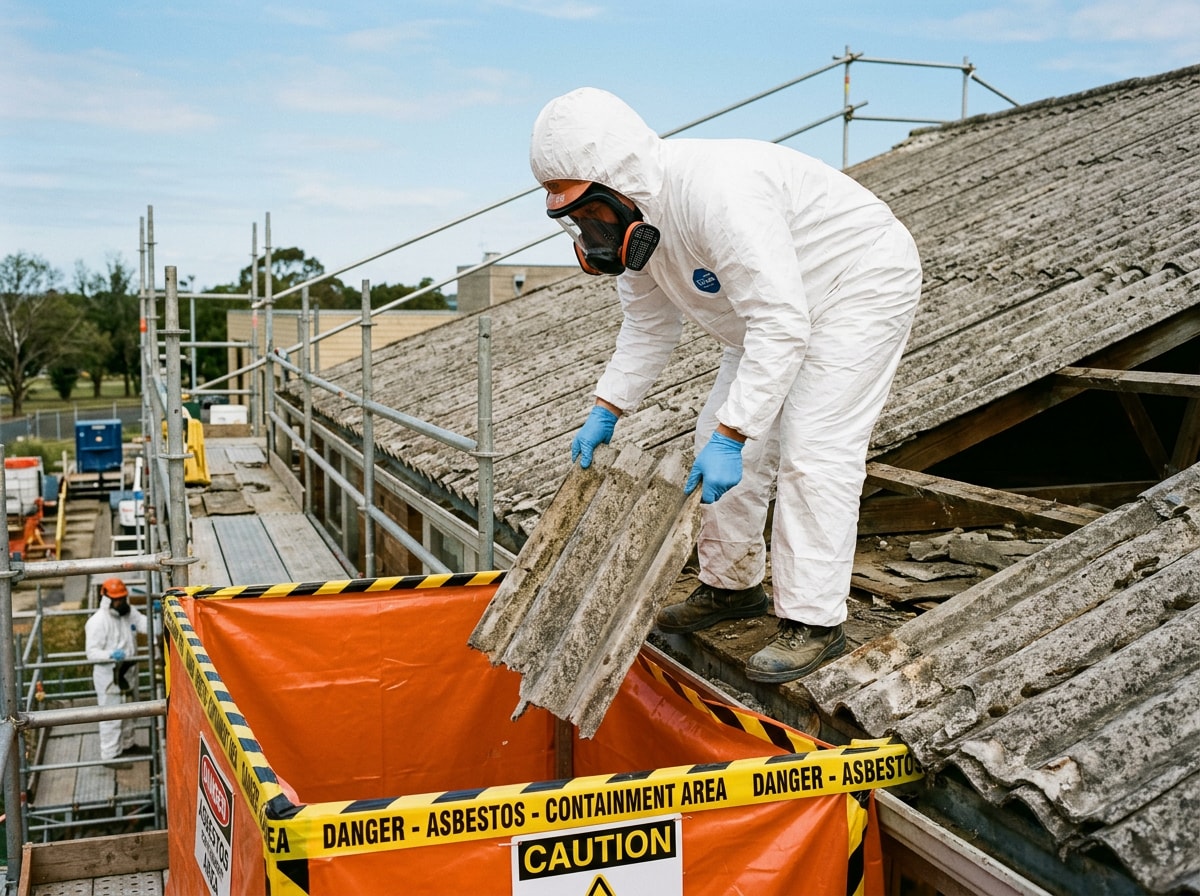
Once asbestos concrete is confirmed, property owners generally have two paths: hire a licensed abatement contractor, or in narrow cases, handle a small amount of intact material themselves. Both depend on wet methods and proper protective equipment to keep fibers out of the air.
| Professional Abatement | Limited DIY Removal | |
|---|---|---|
| Who it's for | Large quantities, damaged or friable material, any commercial property | Small, intact, non-friable material only |
| Equipment | Containment, negative-air systems, accredited disposal | Wetting agent, respirator, double-bagging, no power tools |
| Legal status in NC | Required above certain thresholds | Allowed in limited cases, state rules apply |
| Typical outcome | Site is cleared and disposed of to code | Risk of exposure if material is misjudged |
A licensed contractor brings containment equipment and accredited disposal arrangements that most property owners can't replicate. Hiring one isn't optional once you're dealing with large quantities, damaged or crumbling (friable) concrete, or a commercial property subject to stricter oversight.
Some states allow homeowners to remove small amounts of intact, non-friable material themselves, provided they follow strict precautions: thorough wetting to suppress dust, full PPE including a respirator, double-bagging in labeled containment, and no power tools that could fracture the material. Rules vary by locality, so check current North Carolina guidance before attempting any DIY handling.
North Carolina Rules for Asbestos Concrete
Asbestos work is regulated at both the federal and state level, and property owners carry an ongoing duty to manage any known or suspected asbestos-containing material on site. OSHA's construction standard spells out exposure limits, monitoring, and required work practices for anyone disturbing asbestos materials on the job, detailed in 29 CFR 1926.1101.
In North Carolina specifically, the NC DHHS Asbestos Hazard Management Program issues permits for removal projects and accredits the professionals who perform the work. A detail many homeowners miss: for demolition or renovation projects involving regulated asbestos-containing material above certain thresholds, roughly 160 square feet, 260 linear feet, or 35 cubic feet, a completed permit application must go in at least 10 working days before work starts. Smaller projects still require notification, just at a lower fee tier.
Document the material's condition and avoid disturbing it until testing confirms what you're dealing with. That single step prevents most of the compliance headaches that come up during a renovation.
What Happens After Asbestos Concrete Is Removed
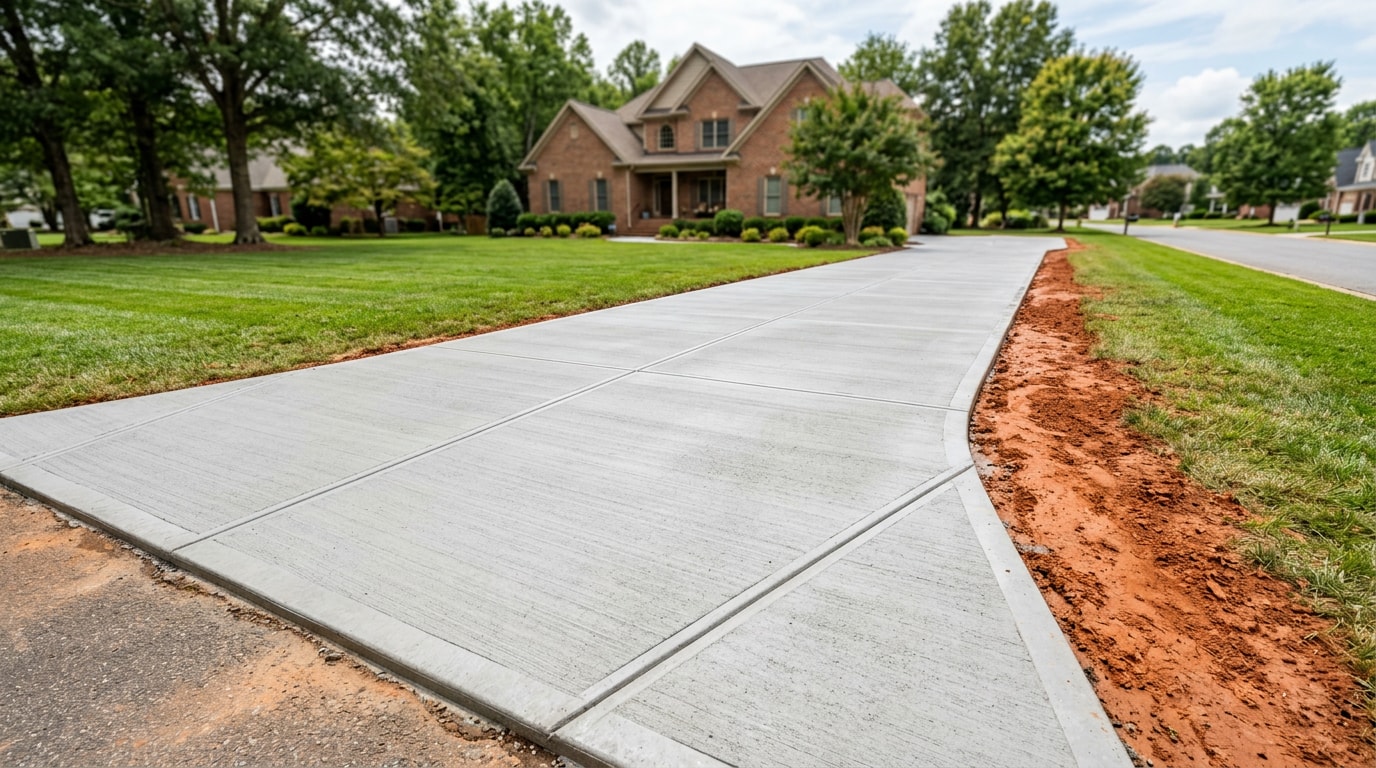
This is the part most asbestos-focused guides skip, because it's outside their scope. Once a licensed abatement crew clears old cement roofing, siding, or a cracked driveway apron, the site usually isn't ready to build on. It needs proper site preparation and a compacted base before new paving or concrete goes down.
We see this constantly on older Matthews and Pineville properties: a homeowner removes an asbestos-cement driveway edge or a deteriorated slab, only to find the subgrade underneath needs grading, drainage correction, or new base installation before anything else can go back. Skipping that step is how a new driveway or parking lot starts failing within a couple of seasons.
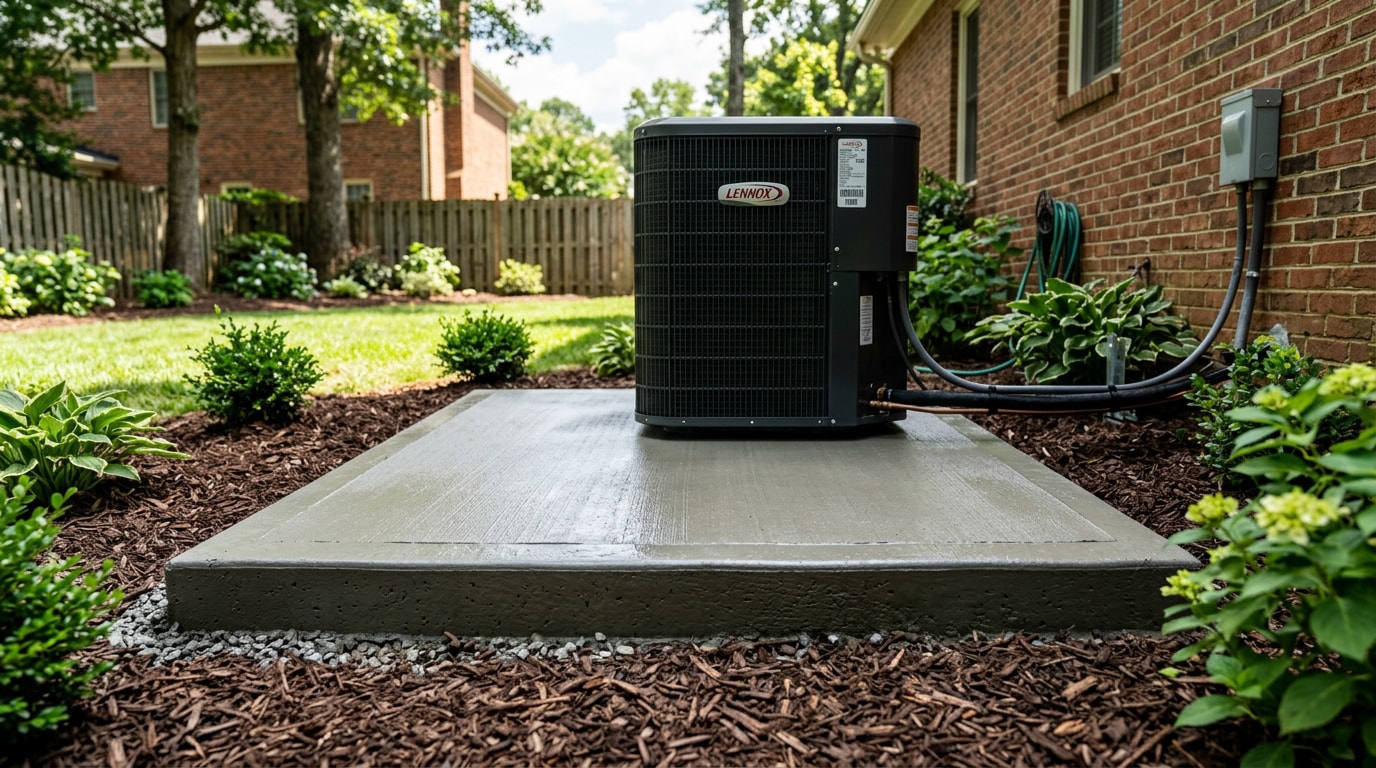
If your project involves replacing a driveway, lot, or walkway that sat on top of old asbestos-cement material, it's worth lining up site preparation and paving in the same plan as the abatement, rather than treating them as separate jobs. For homeowners, that usually means driveway paving; for commercial properties, it's often parking lot paving. If you're also dealing with older concrete footings or support structures on the same property, our guide to concrete plinths in Pineville, NC covers how to evaluate and replace those once they're past their service life.
Request an estimate once abatement is scheduled or complete, and we'll plan the site work and paving around your contractor's timeline.
FAQ
Is asbestos commonly found in concrete?
Asbestos was commonly used in concrete and cement products through the mid-20th century for added strength and fire resistance. It's rarely found in modern concrete since regulations phased out the practice decades ago.
How can I tell if my concrete contains asbestos?
You can't identify it by looking. Fibers are mixed evenly through the material and aren't visible to the naked eye. Lab testing of a physical sample by a certified facility is the only reliable confirmation.
Do they still use asbestos in concrete?
Trace amounts remain technically legal in a small number of U.S. products, but domestic manufacturers largely abandoned asbestos in cement decades ago due to liability and regulatory pressure. Modern concrete and cement products are overwhelmingly asbestos-free.
Is it safe to live in a home with asbestos concrete?
Yes, as long as the material stays intact and undisturbed. The risk comes from cutting, drilling, sanding, or demolishing it, not from its presence alone. Monitor the material's condition and avoid disturbing it until it's tested.
Can I pour new concrete over old asbestos concrete?
Generally no, not without testing and likely abatement first. Covering it doesn't eliminate the duty to manage it, and any future cutting or demolition on the new layer could still disturb the material underneath.
How long does an NC asbestos removal permit take before work can start?
Property owners must submit a completed permit application to NC DHHS at least 10 working days before the project begins. Larger projects above certain thresholds also carry a higher permit fee.
How much does it cost to test concrete for asbestos?
Costs vary by lab, sample count, and whether a professional collects the sample on-site, but budgeting in the low hundreds of dollars for a single-material sample with collection and lab analysis is a reasonable starting point. Multi-sample surveys cost more. Check with a local provider for an exact quote.
---
This guide reflects general practices for asbestos-containing material in Matthews, NC and the Charlotte metro area. It was reviewed by the site work and paving team at Ward Contracting Inc, who routinely coordinate site preparation and paving around licensed asbestos abatement on pre-1980 properties in Matthews and surrounding Mecklenburg County. We are not an asbestos testing or abatement company; for sampling and removal, hire an NC-accredited asbestos professional. For the paving and site work that follows, contact us for an estimate.